AppRecs review analysis
AppRecs rating 3.5. Trustworthiness 45 out of 100. Review manipulation risk 28 out of 100. Based on a review sample analyzed.
★★★☆☆
3.5
AppRecs Rating
Ratings breakdown
5 star
100%
4 star
0%
3 star
0%
2 star
0%
1 star
0%
What to know
⚠
Limited rating diversity
100% high ratings in sampled reviews
About DDB Access
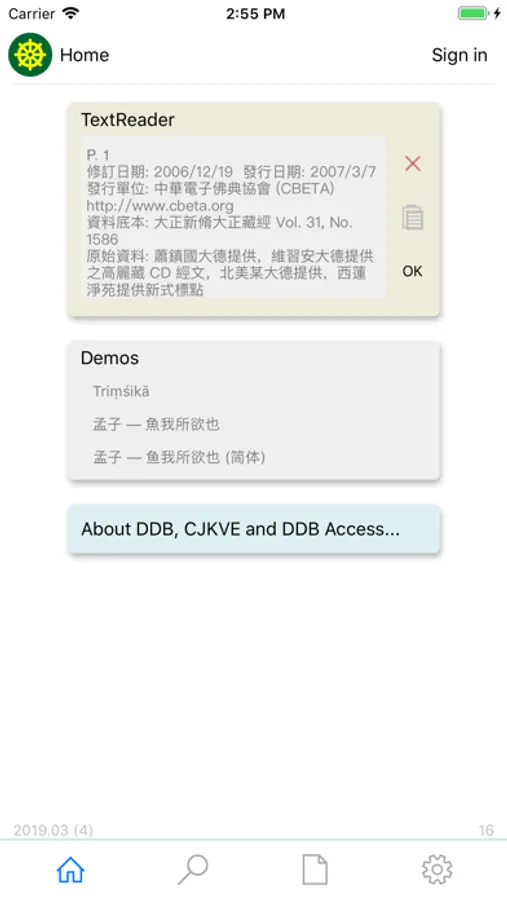
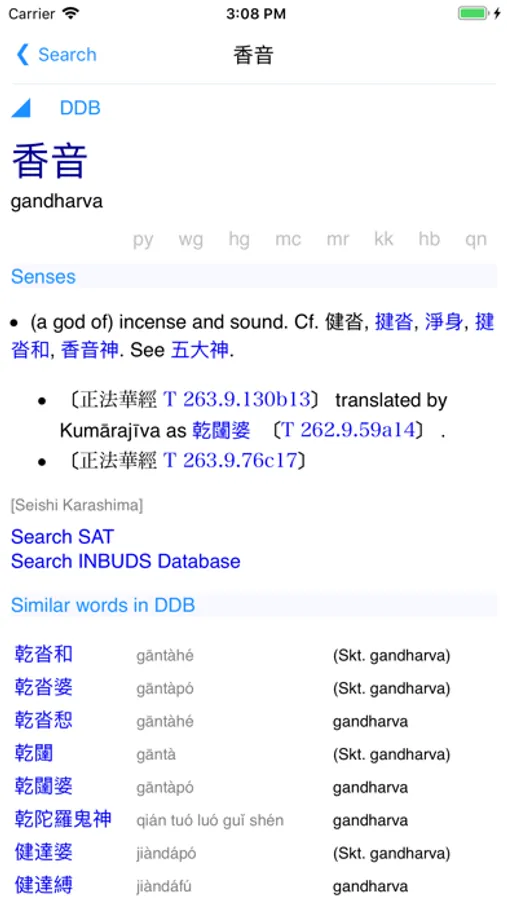
DDB (Digital Dictionary of Buddhism) and CJKV-E (Classical Chinese) are collaborative works edited by Charles Muller, University of Tokyo. DDB Access gives access to DDB and CJKV-E from iPhone and iPad.
DDB Access is a free application. Any user may access the dictionary by entering "guest" as the username with no password. This will allow a total of 20 searches in each of the DDB and CJKV-E dictionaries in a 24-hour period.
Contributors can get unlimited access by submitting a 350+ word entry as specified at http://www.buddhism-dict.net/contribute.html
DDB and CJKV-E are primarily resources for scholars. Contributors are required to have completed a graduate degree to at least the equivalent of the M.A. level in graduate school program at a fully accredited university, where one has received direct formal training in the reading of classical East Asian Buddhist texts.
DDB Access also contains a demo (WIP) of Séraphin Couvreur's "Dictionnaire classique de la langue chinoise" which supports most of its translations with example sentences and their sources.
SEARCH
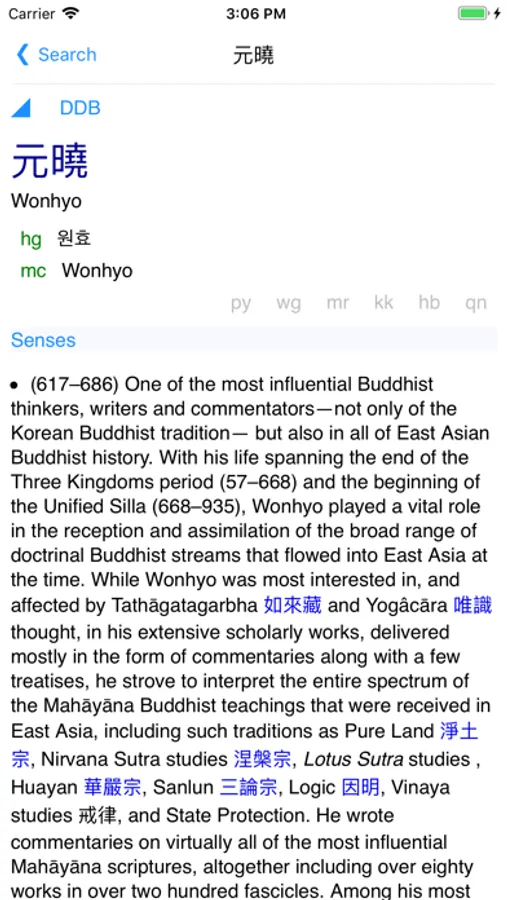
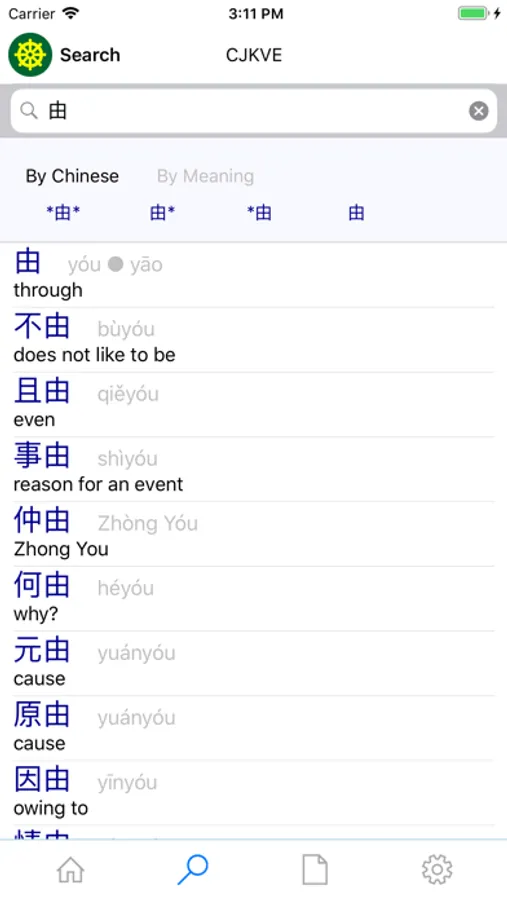
Search dictionaries by Chinese, pinyin or translation.
PARSE AND LOOKUP
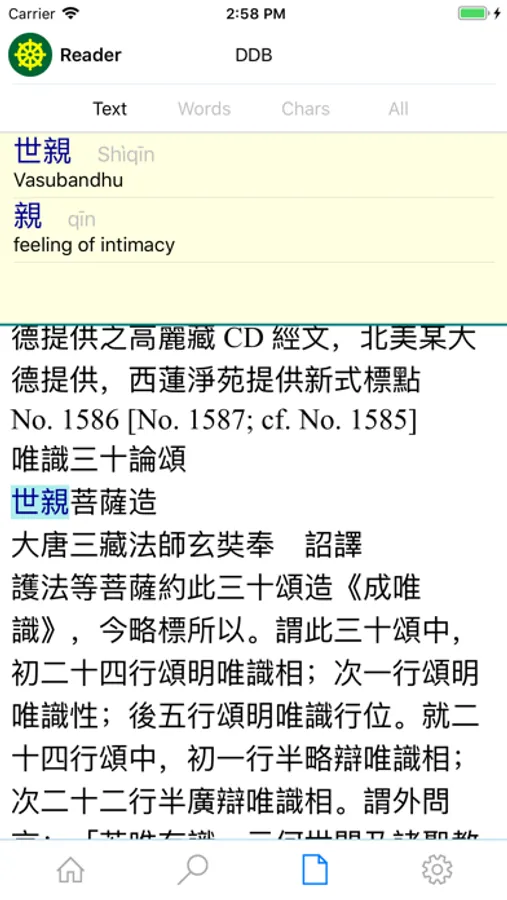
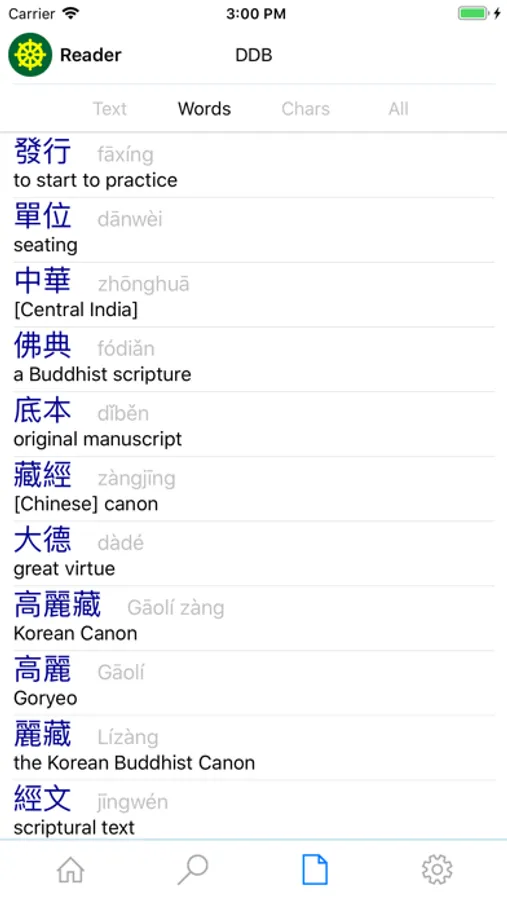
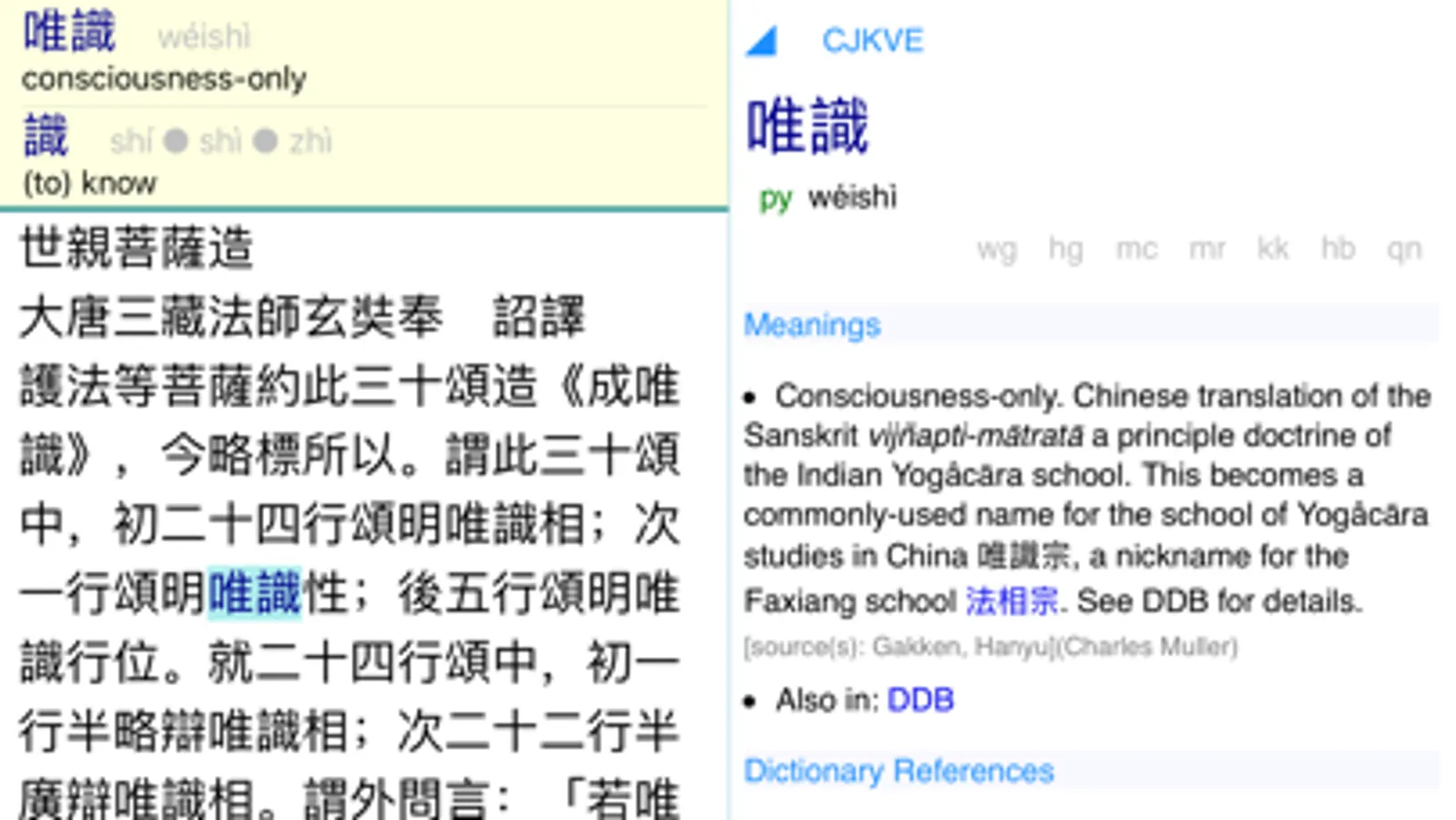
After copying a full text, SmartHanzi provides immediate access to unknown words.
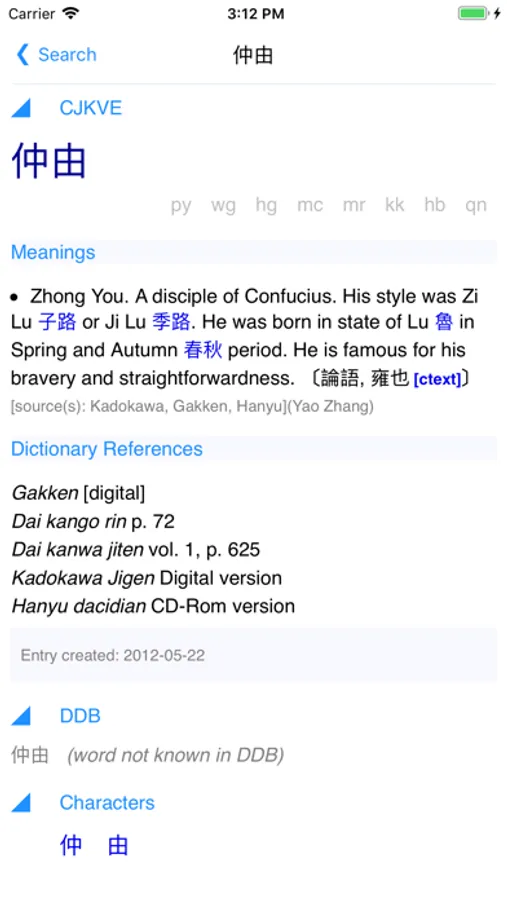
The app shows links to related words (also in, contained) and character details: character series (Kangxi, etymology). With this perspective beyond immediate usage, one gets naturally familiar with words and characters.
It also recognizes multiple traditional variants. For instance, searching 真 (or finding 真 in a text) will show both 真 and 眞, according to what is present in selected dictionaries. Or it will recognize equally well 為 / 爲 or 眾 / 衆.
Texts or individual words can be read aloud with Apple voices.
ETYMOLOGY
Along centuries, Chinese writing has developed a number of reference points, reasonable or simply traditional, well known by most Chinese: "Se non è vero, è ben trovato". Character series emphasize these reference points.
All character series available for the current character are easily accessible.
DICTIONARIES
The application also includes general dictionaries for scholars working on Buddhist texts with literary or historical terminology, and a first demo of the "Couvreur" dictionary for Classical Chinese.
USER INTERFACE
User chooses to show pronunciations in Chinese, Japanese, Korean or Vietnamese.
Lookup is easily customizable to just show preferred details and keep presentation clear.
On iPad, landscape orientation, the app can show either in full screen (with both parse and lookup parts visible) or multiple applications: smartphone-like format side by side with the original text.
MAC VERSION
A dedicated Mac version is on Mac App Store.
DDB Access is a free application. Any user may access the dictionary by entering "guest" as the username with no password. This will allow a total of 20 searches in each of the DDB and CJKV-E dictionaries in a 24-hour period.
Contributors can get unlimited access by submitting a 350+ word entry as specified at http://www.buddhism-dict.net/contribute.html
DDB and CJKV-E are primarily resources for scholars. Contributors are required to have completed a graduate degree to at least the equivalent of the M.A. level in graduate school program at a fully accredited university, where one has received direct formal training in the reading of classical East Asian Buddhist texts.
DDB Access also contains a demo (WIP) of Séraphin Couvreur's "Dictionnaire classique de la langue chinoise" which supports most of its translations with example sentences and their sources.
SEARCH
Search dictionaries by Chinese, pinyin or translation.
PARSE AND LOOKUP
After copying a full text, SmartHanzi provides immediate access to unknown words.
The app shows links to related words (also in, contained) and character details: character series (Kangxi, etymology). With this perspective beyond immediate usage, one gets naturally familiar with words and characters.
It also recognizes multiple traditional variants. For instance, searching 真 (or finding 真 in a text) will show both 真 and 眞, according to what is present in selected dictionaries. Or it will recognize equally well 為 / 爲 or 眾 / 衆.
Texts or individual words can be read aloud with Apple voices.
ETYMOLOGY
Along centuries, Chinese writing has developed a number of reference points, reasonable or simply traditional, well known by most Chinese: "Se non è vero, è ben trovato". Character series emphasize these reference points.
All character series available for the current character are easily accessible.
DICTIONARIES
The application also includes general dictionaries for scholars working on Buddhist texts with literary or historical terminology, and a first demo of the "Couvreur" dictionary for Classical Chinese.
USER INTERFACE
User chooses to show pronunciations in Chinese, Japanese, Korean or Vietnamese.
Lookup is easily customizable to just show preferred details and keep presentation clear.
On iPad, landscape orientation, the app can show either in full screen (with both parse and lookup parts visible) or multiple applications: smartphone-like format side by side with the original text.
MAC VERSION
A dedicated Mac version is on Mac App Store.