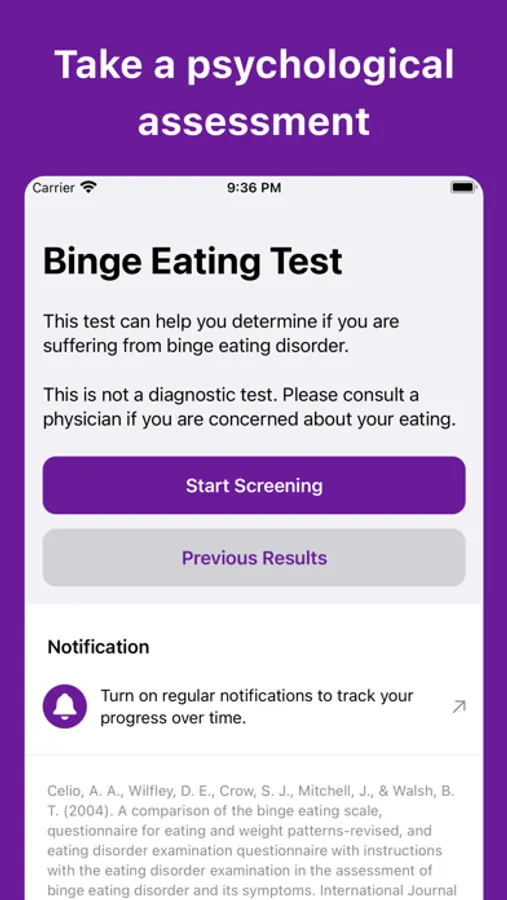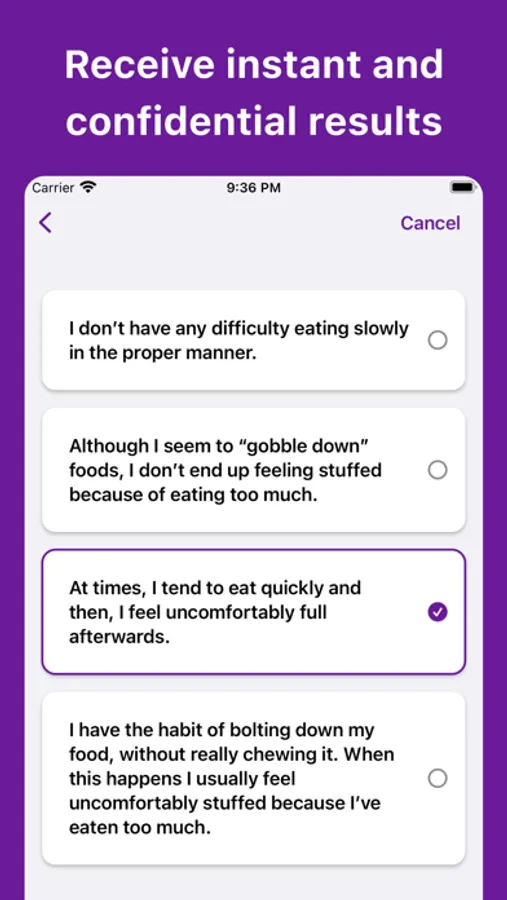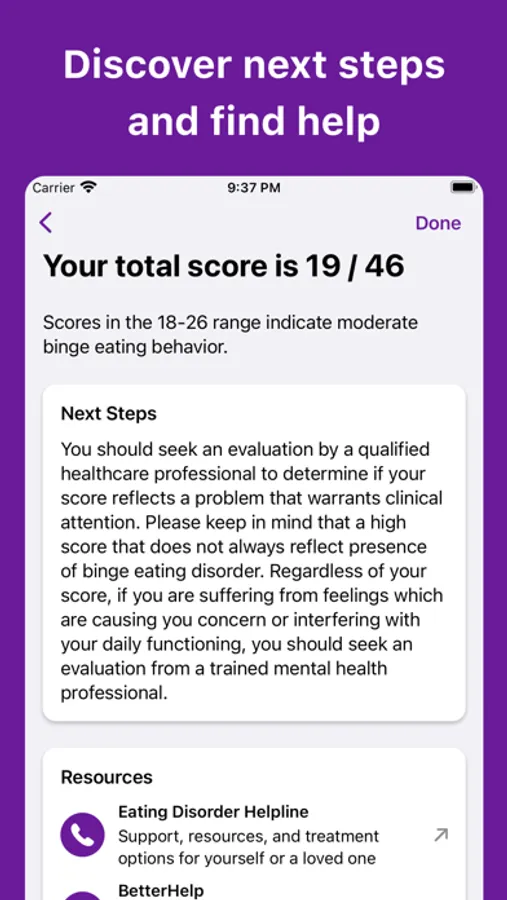
With this screening app, you can evaluate your risk of binge eating disorder using a validated questionnaire and track your responses over time. Includes a risk assessment questionnaire and educational resources on eating behaviors and mental health.
AppRecs review analysis
AppRecs rating 4.7. Trustworthiness 0 out of 100. Review manipulation risk 0 out of 100. Based on a review sample analyzed.
★★★★☆
4.7
AppRecs Rating
Ratings breakdown
5 star
80%
4 star
12%
3 star
5%
2 star
2%
1 star
0%
What to know
✓
High user satisfaction
80% of sampled ratings are 5 stars
About Binge Eating Disorder Test
Evaluate your risk of binge eating disorder with a validated screening questionnaire.
Binge Eating Disorder is a eating disorder characterized by binge eating episodes but without unhealthy purging behavior such as vomiting. It is the most common eating disorder in adults and
Not everyone who binges on food has Binge Eating Disorder. Binge Eating Disorder requires negative physical, psychological, or social effects such as:
Marked distress regarding binge eating
Subjective loss of control over how much or what is eaten
Feelings of shame, guilt, and disgust following a food binge
Eating alone or secretly due to embarrassment
Binge Eating Disorder can have a wide variety of mental and physical consequences, such as obesity and depression. However, it can be effectively treated through psychotherapy, medication, surgery, and lifestyle interventions.
Disclaimer: This test is NOT a diagnostic test. A diagnosis can only be provided by a qualified healthcare professional. Please consult a physician or mental health professional if you are concerned about your mental health.
Celio, A. A., Wilfley, D. E., Crow, S. J., Mitchell, J., & Walsh, B. T. (2004). A comparison of the binge eating scale, questionnaire for eating and weight patterns‐revised, and eating disorder examination questionnaire with instructions with the eating disorder examination in the assessment of binge eating disorder and its symptoms. International Journal of Eating Disorders, 36(4), 434-444.
Binge Eating Disorder is a eating disorder characterized by binge eating episodes but without unhealthy purging behavior such as vomiting. It is the most common eating disorder in adults and
Not everyone who binges on food has Binge Eating Disorder. Binge Eating Disorder requires negative physical, psychological, or social effects such as:
Marked distress regarding binge eating
Subjective loss of control over how much or what is eaten
Feelings of shame, guilt, and disgust following a food binge
Eating alone or secretly due to embarrassment
Binge Eating Disorder can have a wide variety of mental and physical consequences, such as obesity and depression. However, it can be effectively treated through psychotherapy, medication, surgery, and lifestyle interventions.
Disclaimer: This test is NOT a diagnostic test. A diagnosis can only be provided by a qualified healthcare professional. Please consult a physician or mental health professional if you are concerned about your mental health.
Celio, A. A., Wilfley, D. E., Crow, S. J., Mitchell, J., & Walsh, B. T. (2004). A comparison of the binge eating scale, questionnaire for eating and weight patterns‐revised, and eating disorder examination questionnaire with instructions with the eating disorder examination in the assessment of binge eating disorder and its symptoms. International Journal of Eating Disorders, 36(4), 434-444.