About PKU Bite
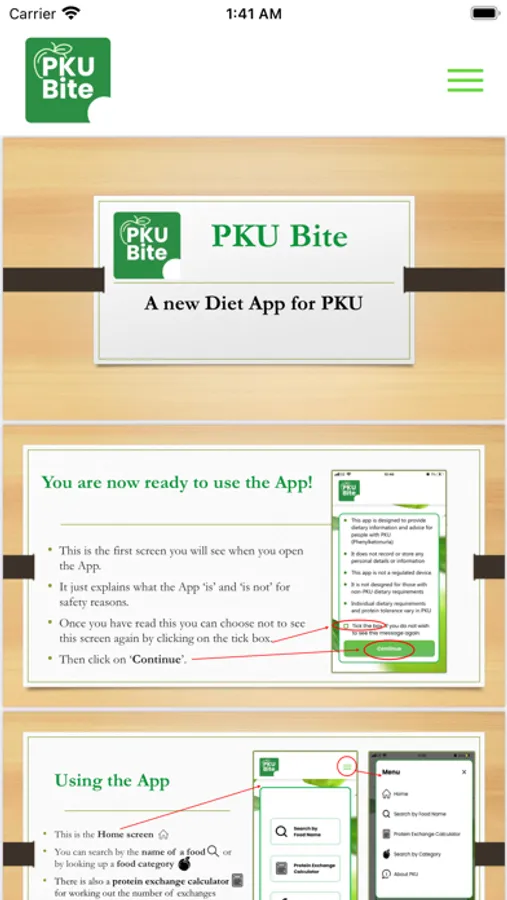
PKU Bite is an app for people with phenylketonuria (PKU) or their families or carers.
A low phenylalanine diet is the main treatment for PKU. Phenylalanine is found in protein, so protein
containing foods need to be restricted. It cannot be removed from the diet completely as it is needed for
growth and repair in the body. In PKU protein is given in measured amounts each day, known as
exchanges.
Knowing which foods contain protein and in what quantity is difficult to remember. Reading and
interpreting food labels on manufactured foods can be particularly confusing.
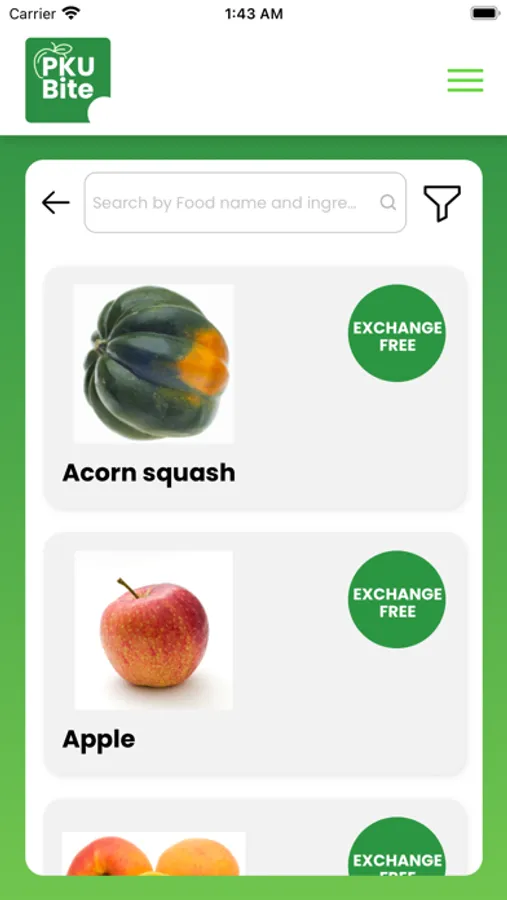
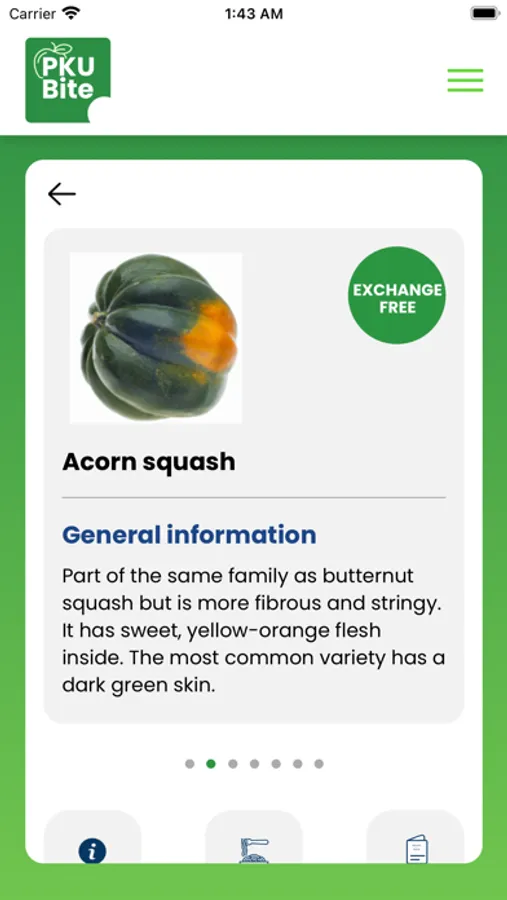
PKU Bite contains information on over 1100 foods. It describes which foods are low in protein and so can
be eaten without measuring (‘exchange free foods’), foods which are high in protein so best avoided, and
foods which need to be calculated as part of the daily protein/phenylalanine exchange allowance. Foods
are colour coded using the traffic light system used by the patient support group, NSPKU.
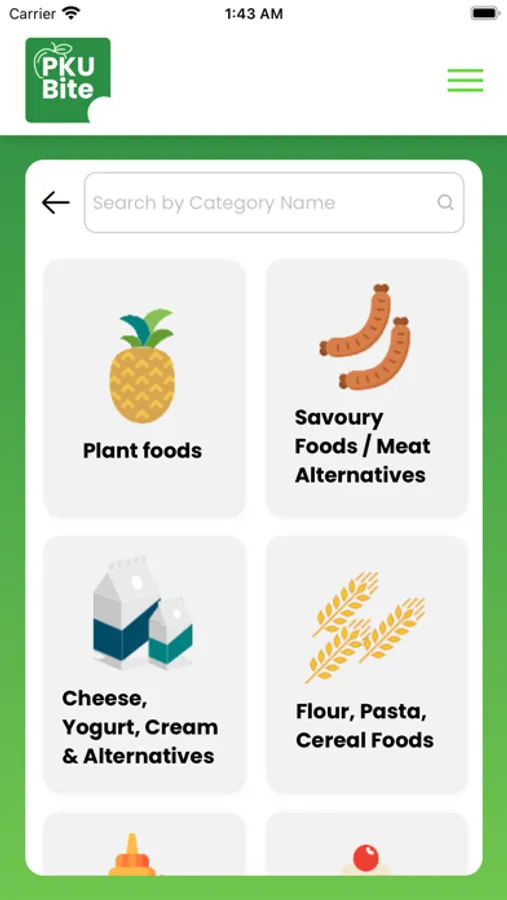
Each food has information on: what the food is, food preparation, storage, availability, menu ideas and
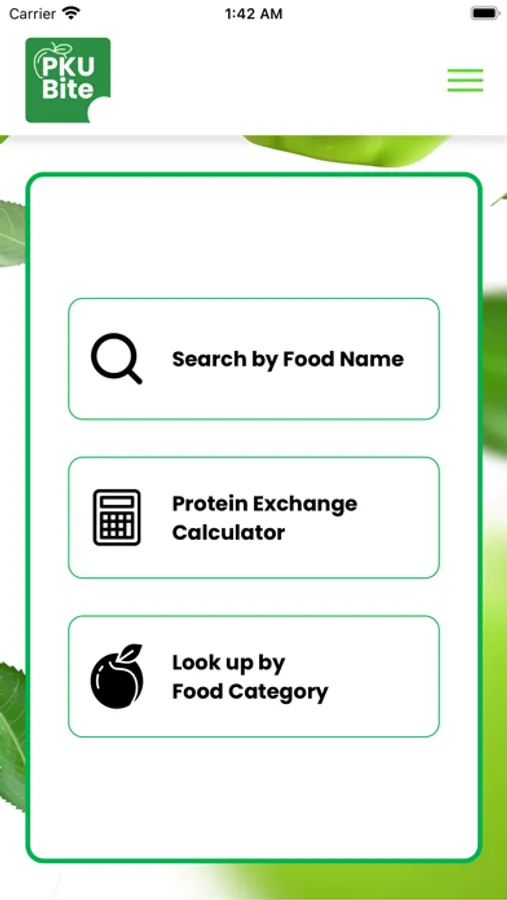
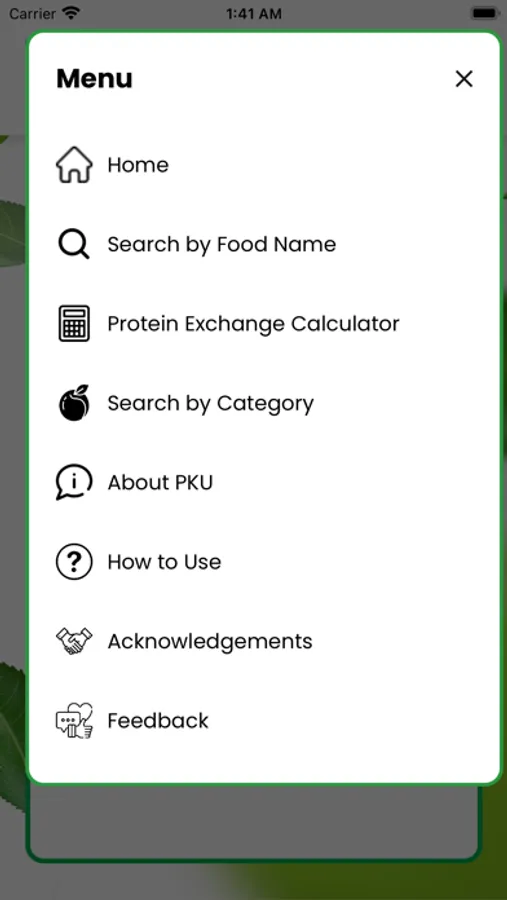
recipes. Foods can be searched for by name or by food category.
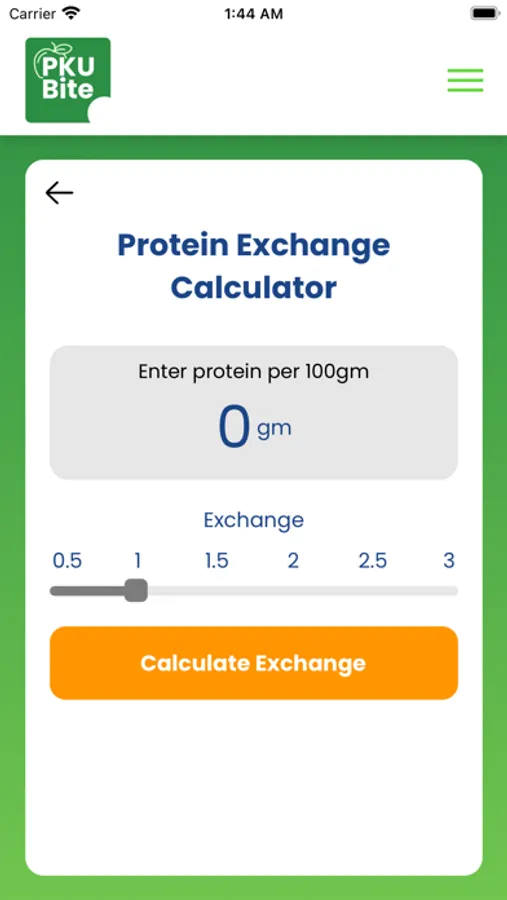
An inbuilt calculator enables the user to enter protein values from food labels and it will calculate the number of protein exchanges per 100g or per portion of the food.
***Disclaimer***
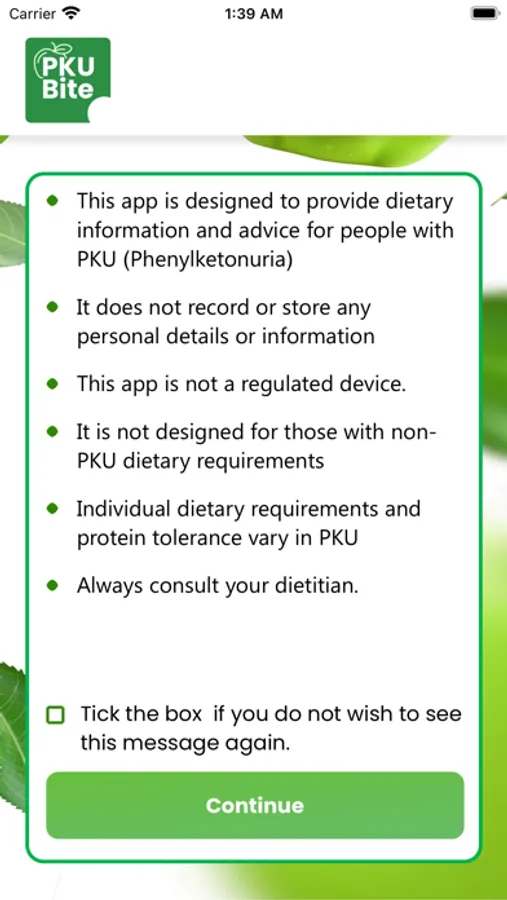
This application does not replace individual dietary advice, please consult your doctor or healthcare professional if you need diet or treatment information.
This application is based on guidelines within the United Kingdom, other countries and territories may have different guidelines, please check with your doctor or healthcare professional before use.
A low phenylalanine diet is the main treatment for PKU. Phenylalanine is found in protein, so protein
containing foods need to be restricted. It cannot be removed from the diet completely as it is needed for
growth and repair in the body. In PKU protein is given in measured amounts each day, known as
exchanges.
Knowing which foods contain protein and in what quantity is difficult to remember. Reading and
interpreting food labels on manufactured foods can be particularly confusing.
PKU Bite contains information on over 1100 foods. It describes which foods are low in protein and so can
be eaten without measuring (‘exchange free foods’), foods which are high in protein so best avoided, and
foods which need to be calculated as part of the daily protein/phenylalanine exchange allowance. Foods
are colour coded using the traffic light system used by the patient support group, NSPKU.
Each food has information on: what the food is, food preparation, storage, availability, menu ideas and
recipes. Foods can be searched for by name or by food category.
An inbuilt calculator enables the user to enter protein values from food labels and it will calculate the number of protein exchanges per 100g or per portion of the food.
***Disclaimer***
This application does not replace individual dietary advice, please consult your doctor or healthcare professional if you need diet or treatment information.
This application is based on guidelines within the United Kingdom, other countries and territories may have different guidelines, please check with your doctor or healthcare professional before use.