Schumann Info Live
Richter und Bodenstein Software GbR
2.7 ★
store rating
$1.99
AppRecs review analysis
AppRecs rating 2.2. Trustworthiness 65 out of 100. Review manipulation risk 29 out of 100. Based on a review sample analyzed.
★★☆☆☆
2.2
AppRecs Rating
Ratings breakdown
5 star
0%
4 star
100%
3 star
0%
2 star
0%
1 star
0%
What to know
✓
Low review manipulation risk
29% review manipulation risk
⚠
Mixed user feedback
Average 2.7★ rating suggests room for improvement
About Schumann Info Live
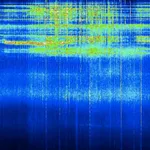
Real-time data directly from our station in Tallinn!
All important information at a glance
3x Zoom
Informational texts
Share your observations with friends
Automatic updates of the graphs
Schumann resonances, frequencies, amplitudes, qualities
Real-time data
Schumann Resonance App
In progress: Historical data
Jonas and Matas, two students from Lithuania, built a measurement device in their free time based on a Russian model. This device captures the Schumann frequency and its oscillation modes, making the data available worldwide. With great enthusiasm and support from Chinese students, who helped set up the second station in China, two stations are now operational: one in Lithuania and one in China.
The measurement data is made publicly accessible, but without any guarantee, as the two are still inexperienced and may not have built all components of the device correctly. Their goal is to spark interest in frequency measurements through their work and contribute to international collaboration.
The measurement data from Tallinn is included; data from China (Jinchang) can be booked at an affordable price.
All important information at a glance
3x Zoom
Informational texts
Share your observations with friends
Automatic updates of the graphs
Schumann resonances, frequencies, amplitudes, qualities
Real-time data
Schumann Resonance App
In progress: Historical data
Jonas and Matas, two students from Lithuania, built a measurement device in their free time based on a Russian model. This device captures the Schumann frequency and its oscillation modes, making the data available worldwide. With great enthusiasm and support from Chinese students, who helped set up the second station in China, two stations are now operational: one in Lithuania and one in China.
The measurement data is made publicly accessible, but without any guarantee, as the two are still inexperienced and may not have built all components of the device correctly. Their goal is to spark interest in frequency measurements through their work and contribute to international collaboration.
The measurement data from Tallinn is included; data from China (Jinchang) can be booked at an affordable price.