WebMO Molecule Editor
WebMO, LLC
4.1 ★
store rating
Free
AppRecs review analysis
AppRecs rating 3.5. Trustworthiness 80 out of 100. Review manipulation risk 22 out of 100. Based on a review sample analyzed.
★★★☆☆
3.5
AppRecs Rating
Ratings breakdown
5 star
63%
4 star
13%
3 star
5%
2 star
8%
1 star
13%
What to know
✓
Low review manipulation risk
22% review manipulation risk
✓
Credible reviews
80% trustworthiness score from analyzed reviews
✓
High user satisfaction
75% of sampled ratings are 4+ stars (4.0★ average)
About WebMO Molecule Editor
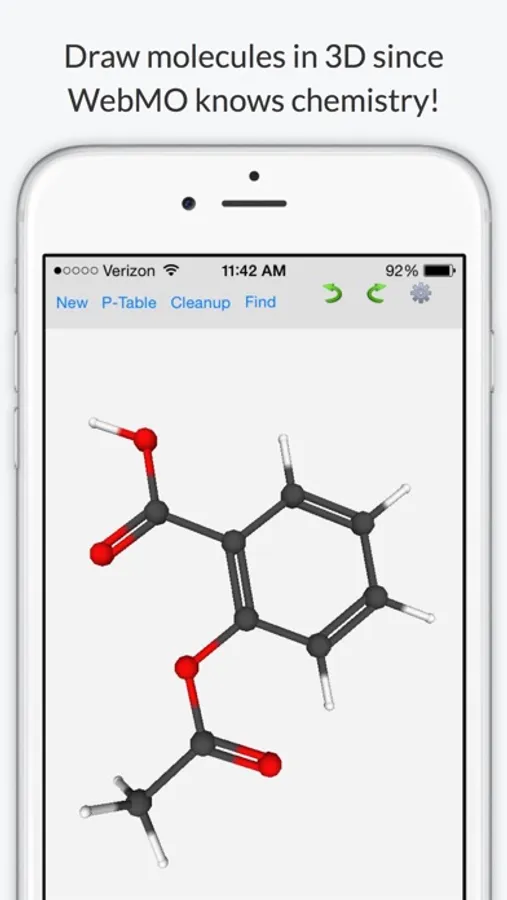
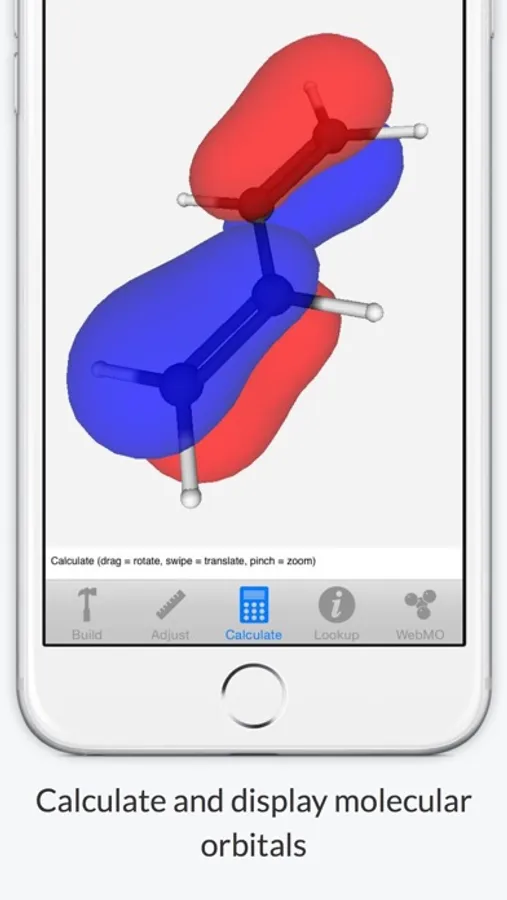
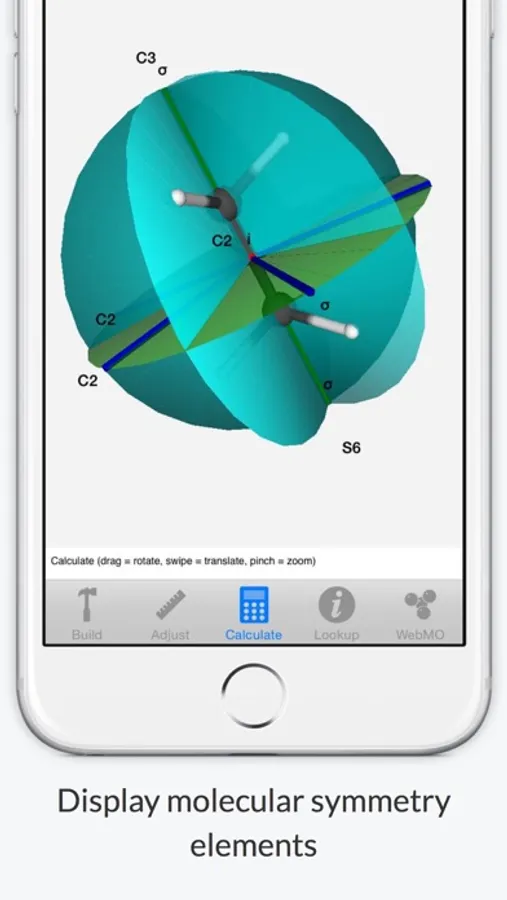
WebMO allows users to build and view molecules in 3-D, visualize orbitals and symmetry elements, lookup chemical information and properties from external databases, and access state-of-the-art computational chemistry programs.
WebMO is recommended for students and faculty in high school, college, and graduate school who desire mobile access to molecular structures, information, and calculations.
WebMO capabilities include:
- Build molecules by drawing atoms and bonds in a 3-D molecular editor, or by speaking the name (e.g., “aspirin”)
- Optimize structures using VSEPR theory or molecular mechanics
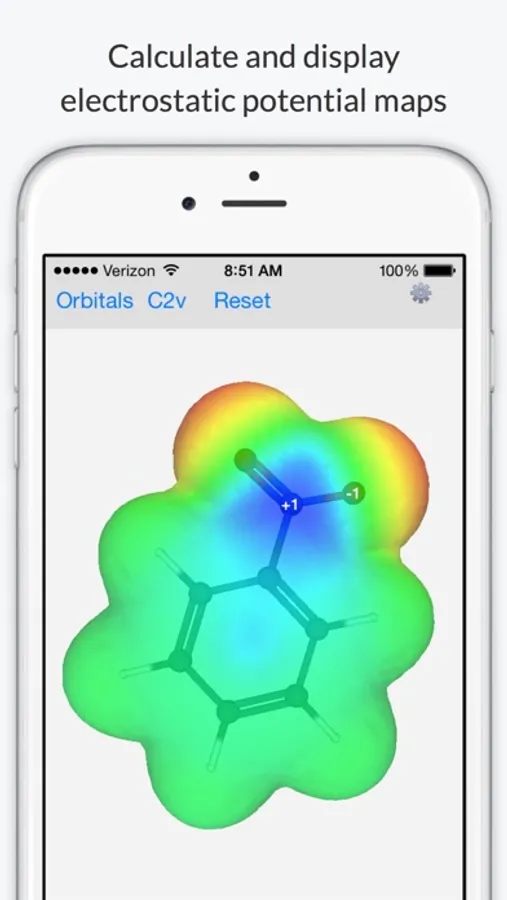
- View Huckel molecular orbitals, electron density, and electrostatic potential
- View molecular vibrations
- View point group and symmetry elements of molecules
- Lookup basic molecular information, including IUPAC and common names, stoichiometry, molar mass
- Lookup chemical data from PubChem and ChemSpider
- Lookup experimental and predicted molecular properties from external databases (NIST, Sigma-Aldrich)
- Lookup IR, UV-VIS, NMR, and mass spectra from external databases (NIST, SDBS)
- Capture high-resolution molecular images
- Save and recall molecular structures locally
- Export and import structures via email
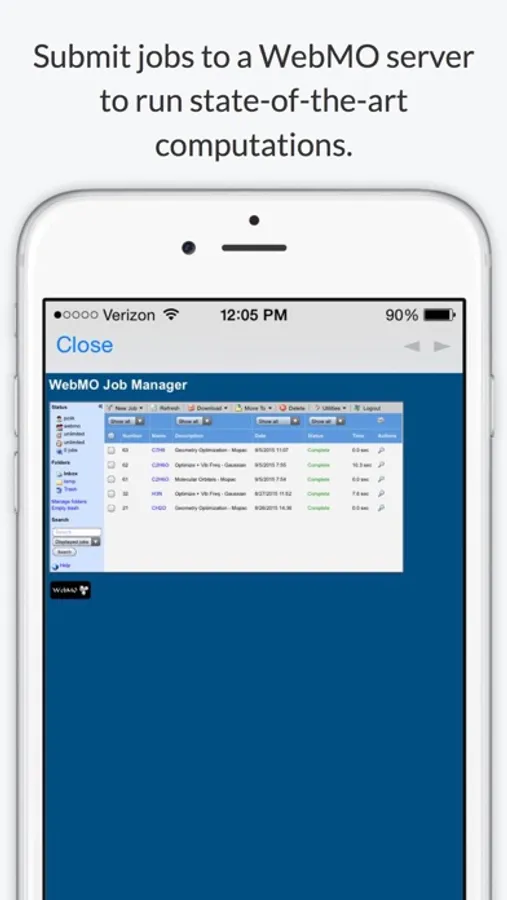
WebMO is also a front-end to WebMO servers (version 14 and higher):
- Supports Gaussian, GAMESS, Molpro, MOPAC, NWChem, ORCA, PQS, PSI, Quantum Espresso, VASP, Q-Chem, and Tinker computational chemistry programs
- Submit, monitor, and view calculations
- View formatted tabular data extracted from output files, as well as raw output
- Visualize geometry, partial charges, dipole moment, normal vibrational modes, molecular orbitals, and NMR/IR/UV-VIS spectra
WebMO is recommended for students and faculty in high school, college, and graduate school who desire mobile access to molecular structures, information, and calculations.
WebMO capabilities include:
- Build molecules by drawing atoms and bonds in a 3-D molecular editor, or by speaking the name (e.g., “aspirin”)
- Optimize structures using VSEPR theory or molecular mechanics
- View Huckel molecular orbitals, electron density, and electrostatic potential
- View molecular vibrations
- View point group and symmetry elements of molecules
- Lookup basic molecular information, including IUPAC and common names, stoichiometry, molar mass
- Lookup chemical data from PubChem and ChemSpider
- Lookup experimental and predicted molecular properties from external databases (NIST, Sigma-Aldrich)
- Lookup IR, UV-VIS, NMR, and mass spectra from external databases (NIST, SDBS)
- Capture high-resolution molecular images
- Save and recall molecular structures locally
- Export and import structures via email
WebMO is also a front-end to WebMO servers (version 14 and higher):
- Supports Gaussian, GAMESS, Molpro, MOPAC, NWChem, ORCA, PQS, PSI, Quantum Espresso, VASP, Q-Chem, and Tinker computational chemistry programs
- Submit, monitor, and view calculations
- View formatted tabular data extracted from output files, as well as raw output
- Visualize geometry, partial charges, dipole moment, normal vibrational modes, molecular orbitals, and NMR/IR/UV-VIS spectra