Twilight: Blue light filter
Petr Nálevka (Urbandroid)
4.6 ★
442K ratings
10,000,000+
downloads
Free
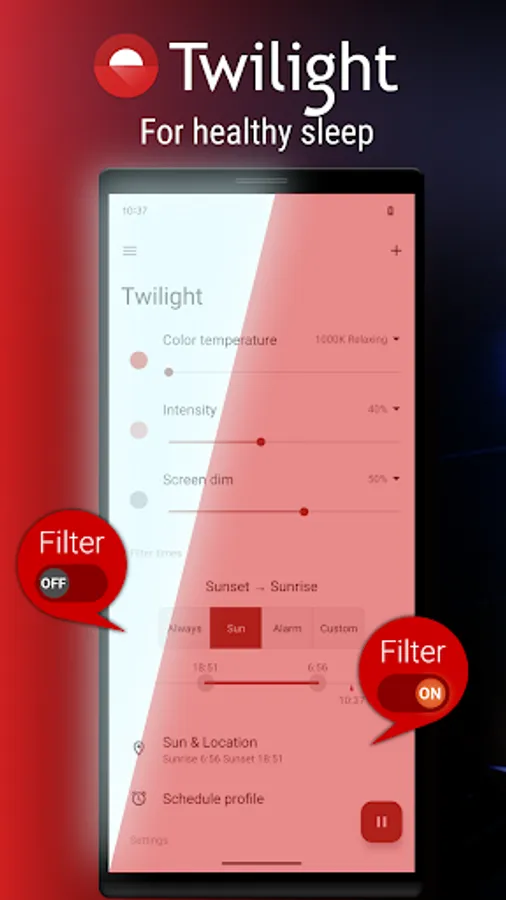
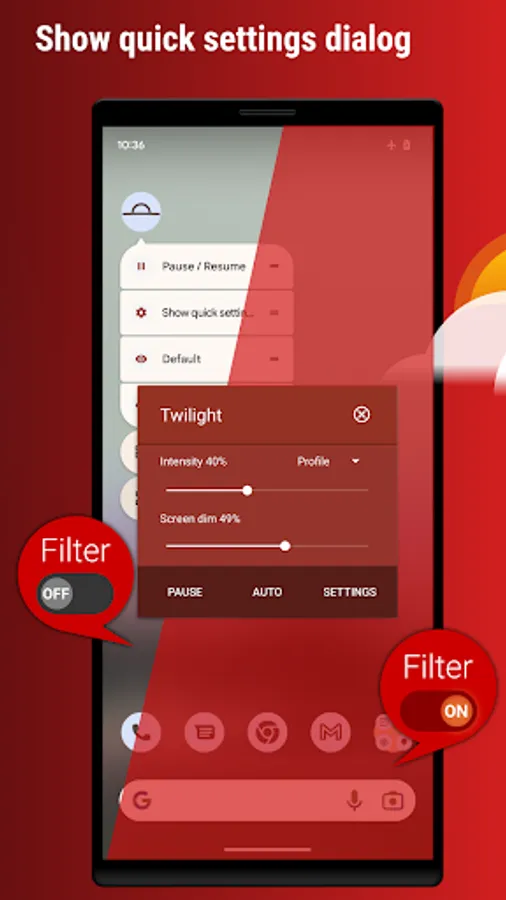
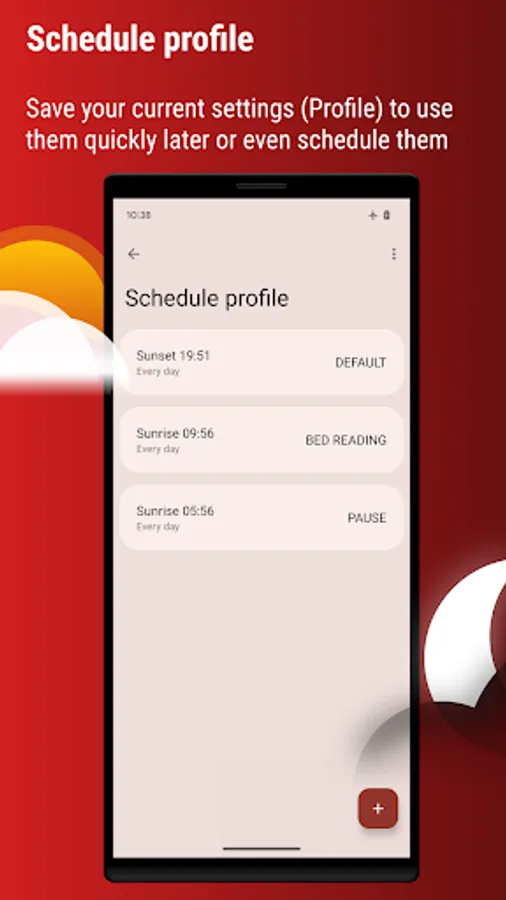
In this blue light filter app, you can schedule screen adjustments to reduce blue light exposure during evening hours and customize filter intensity based on sunset and sunrise times. Includes adaptive filtering, compatibility with Wear OS devices, and options for dimming and tinting screen areas.
AppRecs review analysis
AppRecs rating 4.6. Trustworthiness 57 out of 100. Review manipulation risk 28 out of 100. Based on a review sample analyzed.
★★★★☆
4.6
AppRecs Rating
Ratings breakdown
5 star
79%
4 star
13%
3 star
3%
2 star
2%
1 star
3%
What to know
✓
High user satisfaction
79% of sampled ratings are 5 stars
✓
Authentic reviews
Natural distribution, no red flags
About Twilight: Blue light filter
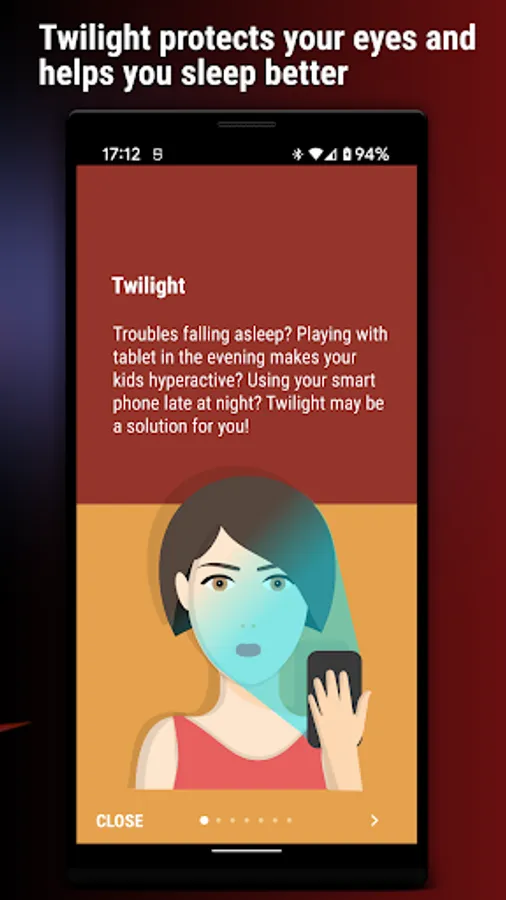
Are you having trouble falling asleep? Are your kids hyperactive when playing with the tablet before bed time?
Are you using your smart phone or tablet in the late evening? Are you sensitive to light during migraine?
Twilight may be a solution for you!
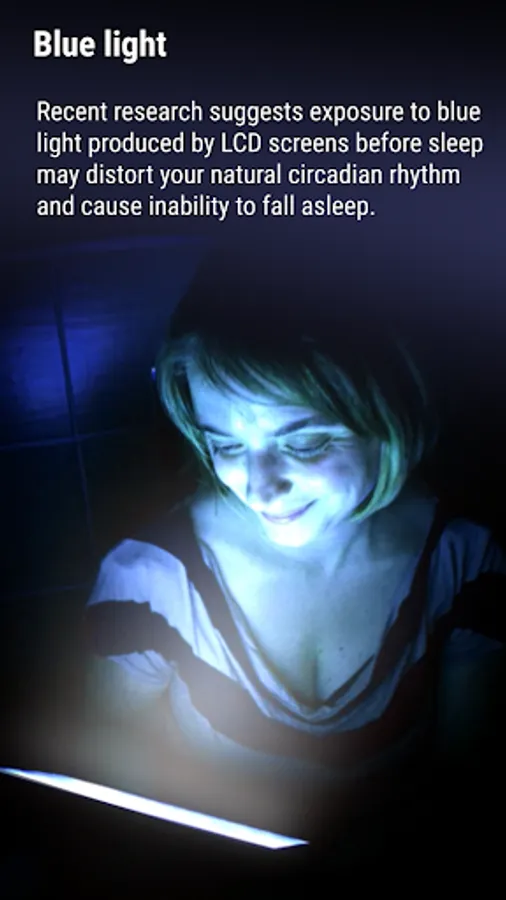
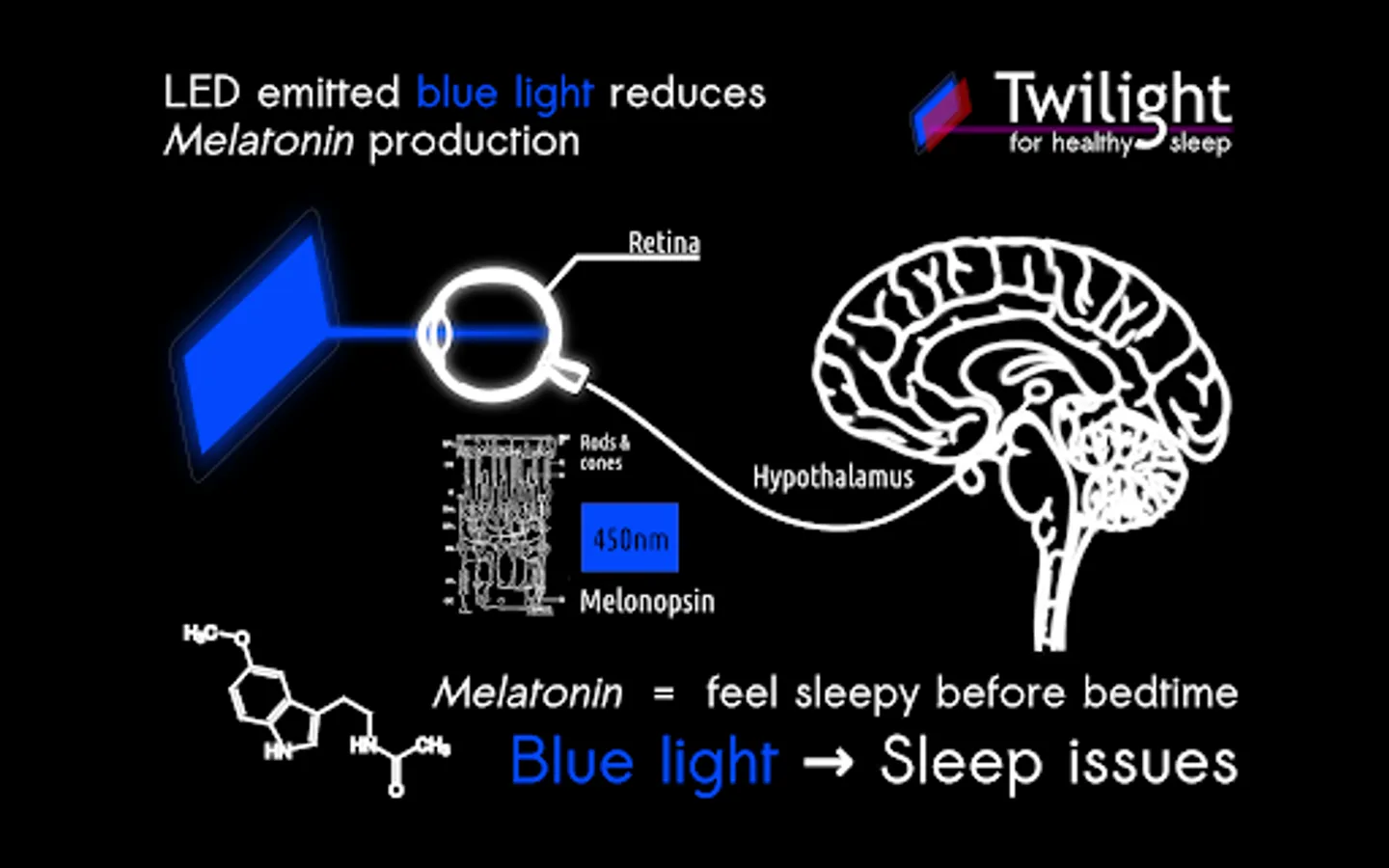
Recent research suggests that exposure to blue light before sleep may distort your natural (circadian) rhythm and cause inability to fall asleep.
The cause is the photoreceptor in your eyes, called Melanopsin. This receptor is sensitive to a narrow band of blue light in the 460-480nm range which may suppress Melatonin production - a hormone responsible for your healthy sleep-wake cycles.
In experimental scientific studies it has been shown an average person reading on a tablet or smart phone for a couple of hours before bed time may find their sleep delayed by about an hour. See references below..
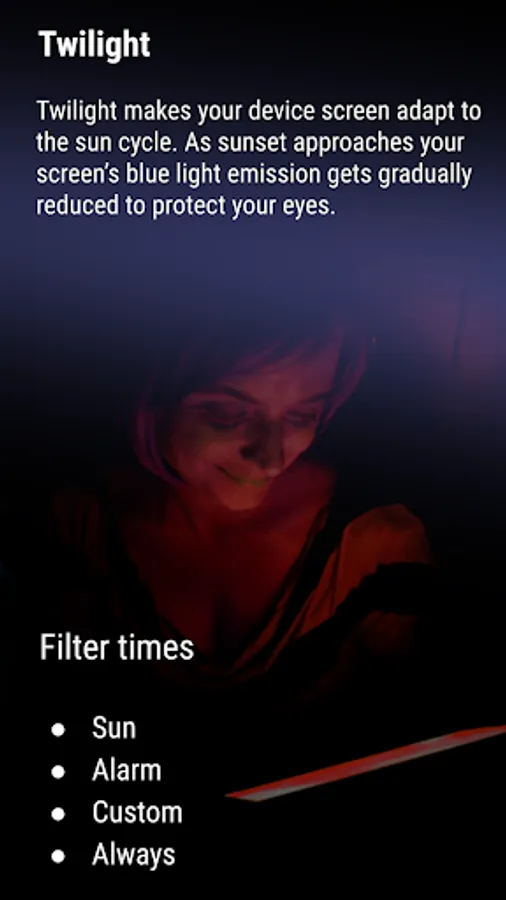
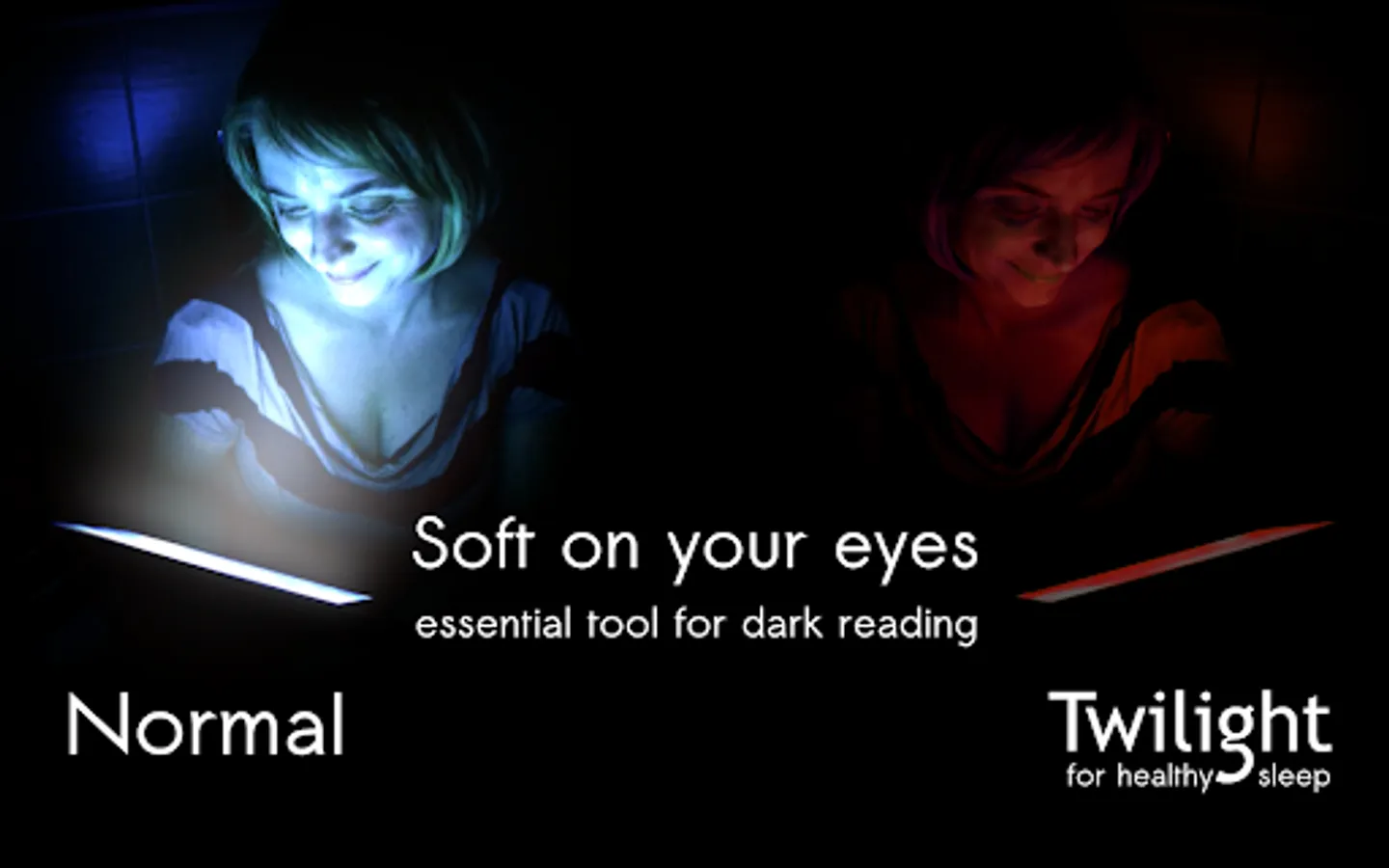
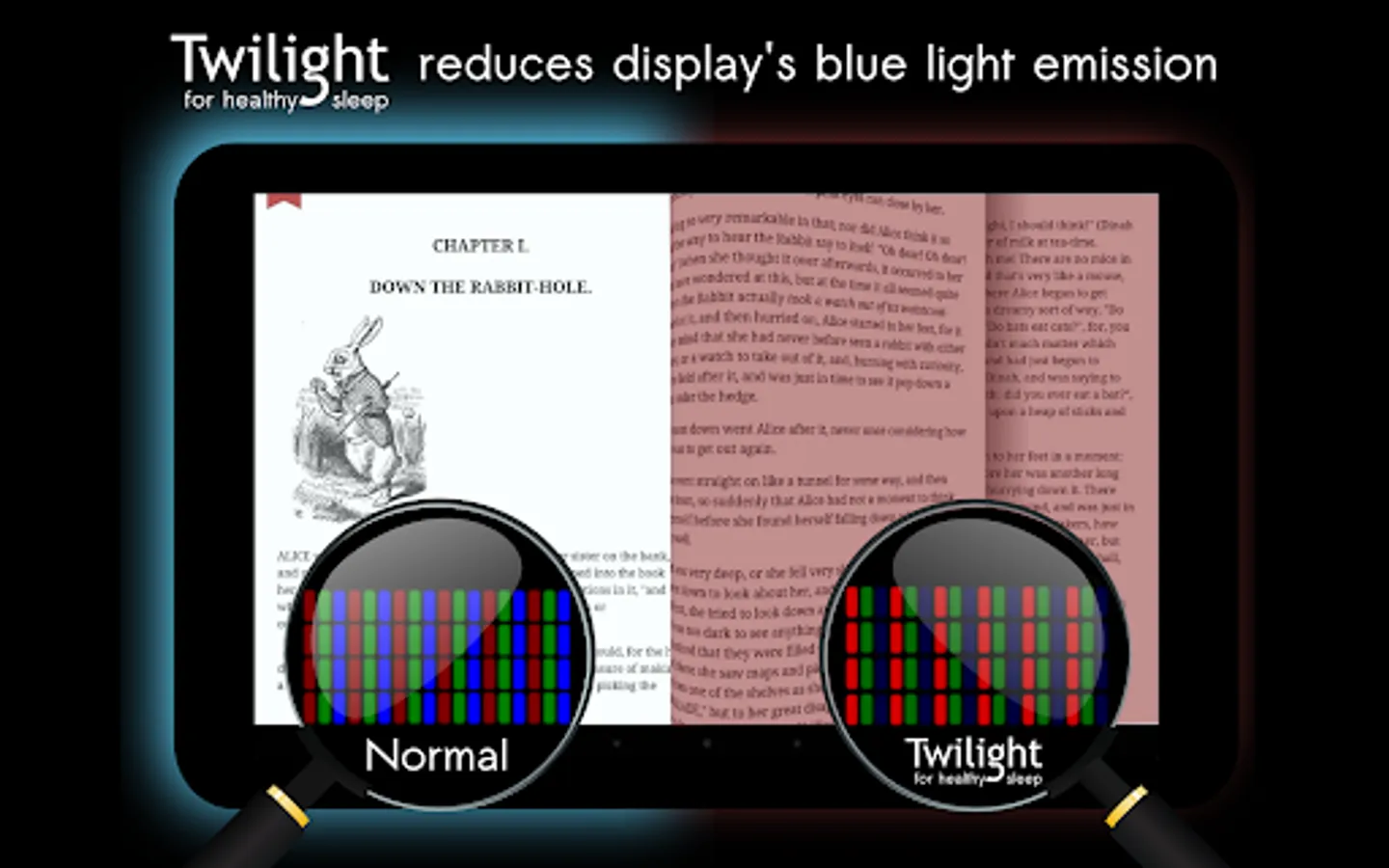
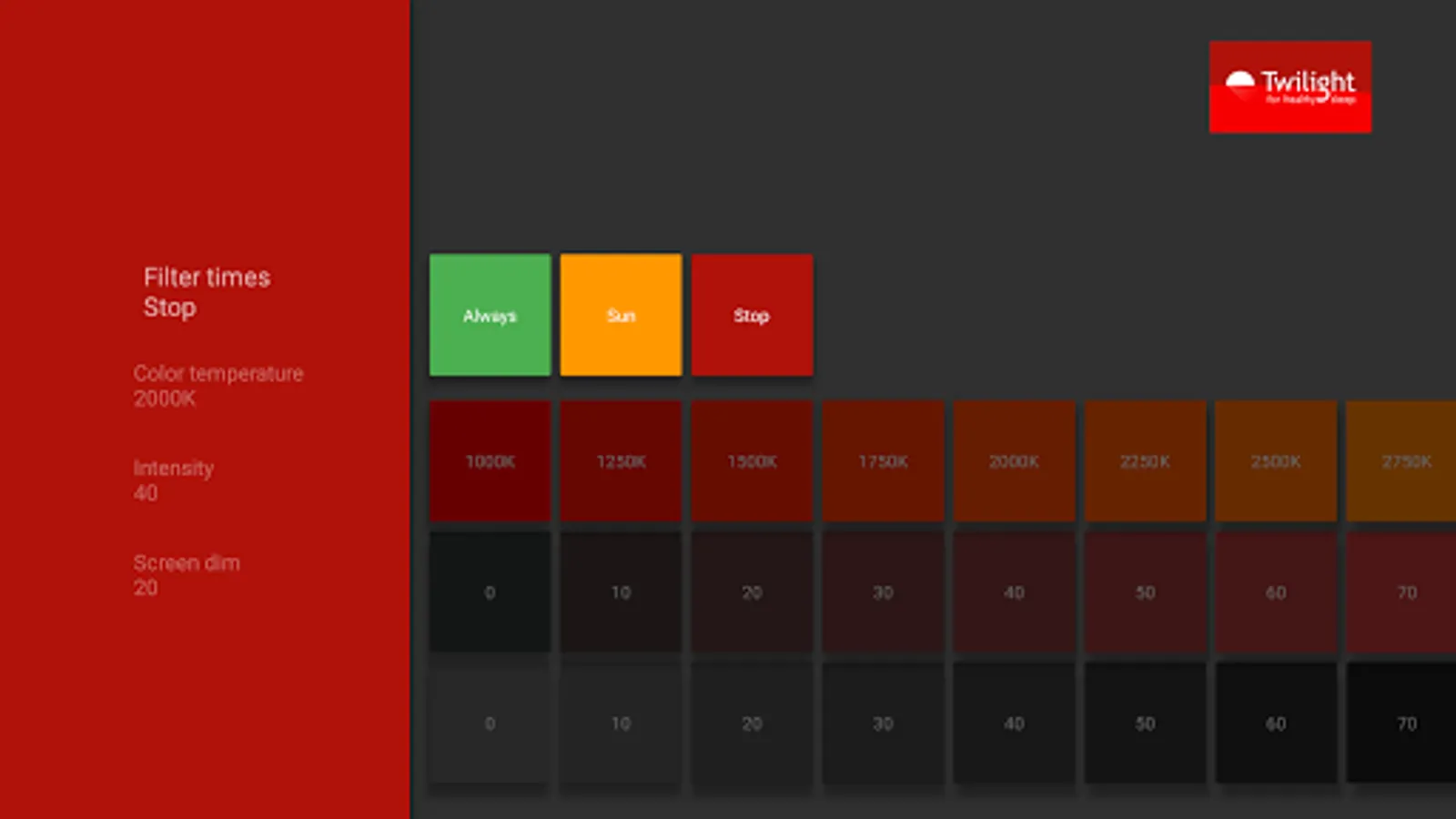
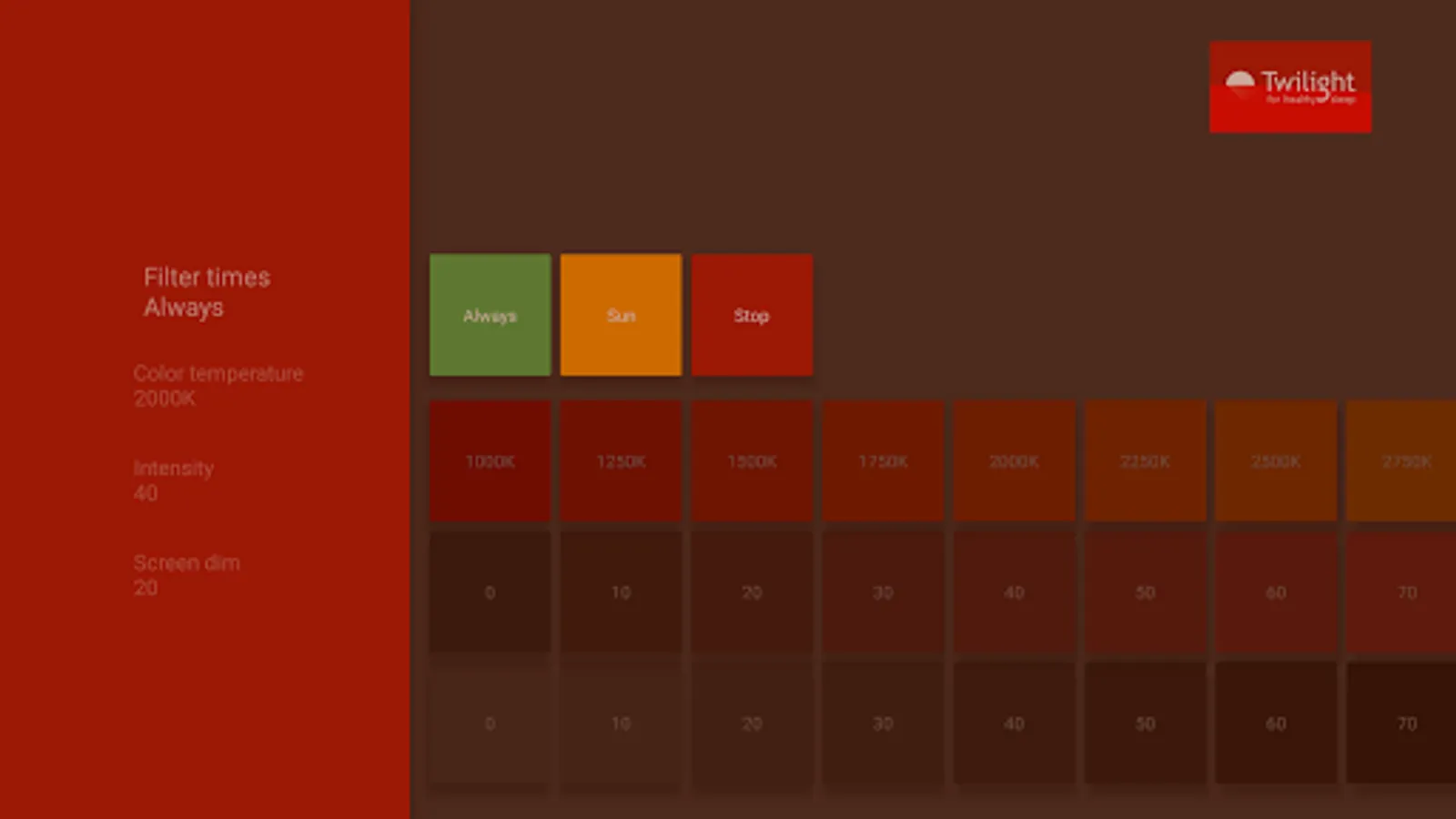
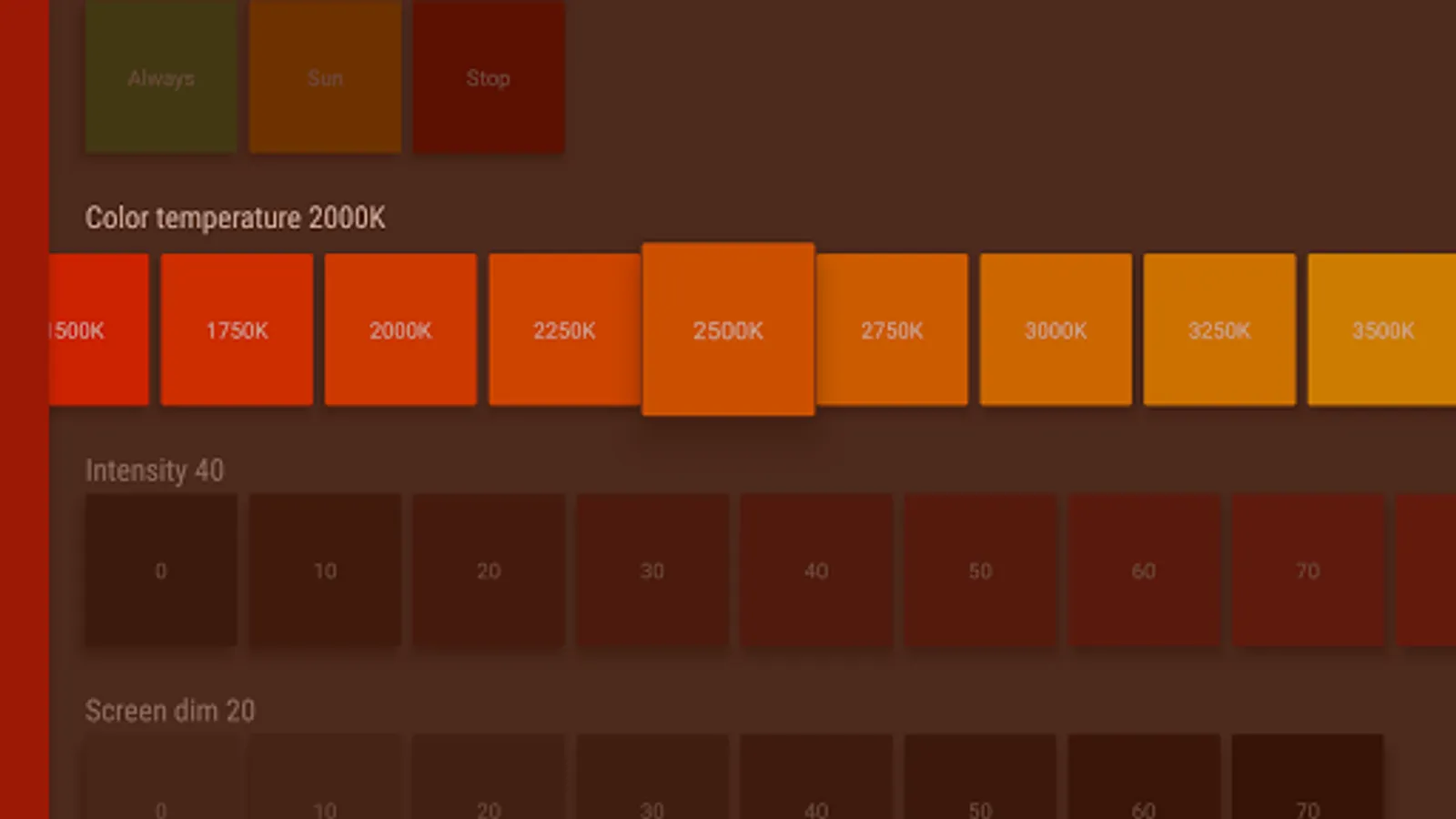
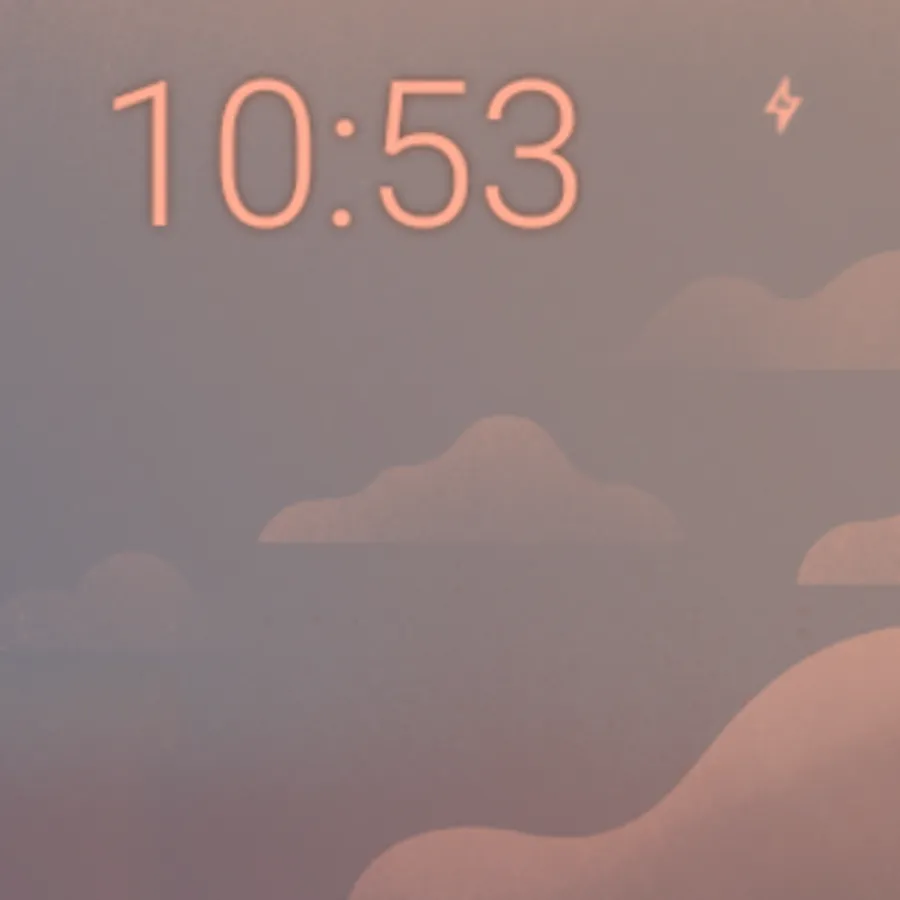
The Twilight app makes your device screen adapt to the time of the day. It filters the flux of blue light emitted by your phone or tablet after sunset and protects your eyes with a soft and pleasant red filter. The filter intensity is smoothly adjusted to the sun cycle based on your local sunset and sunrise times.
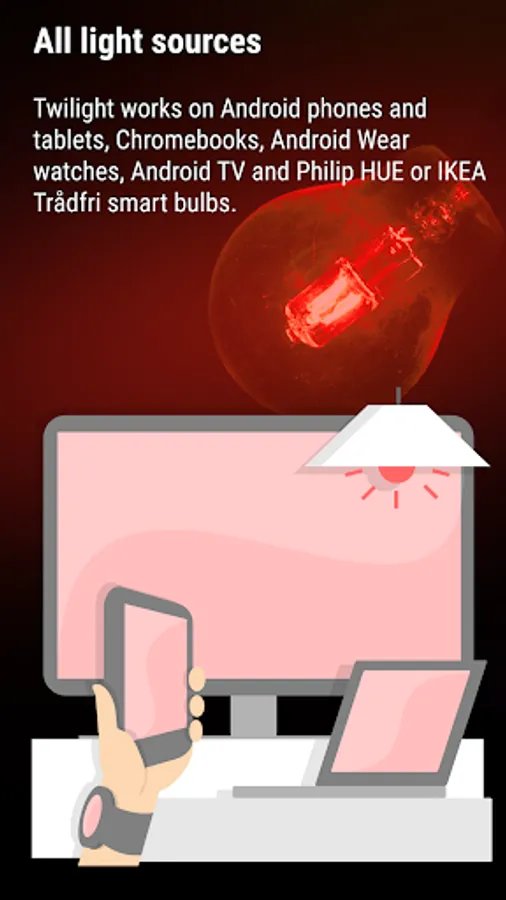
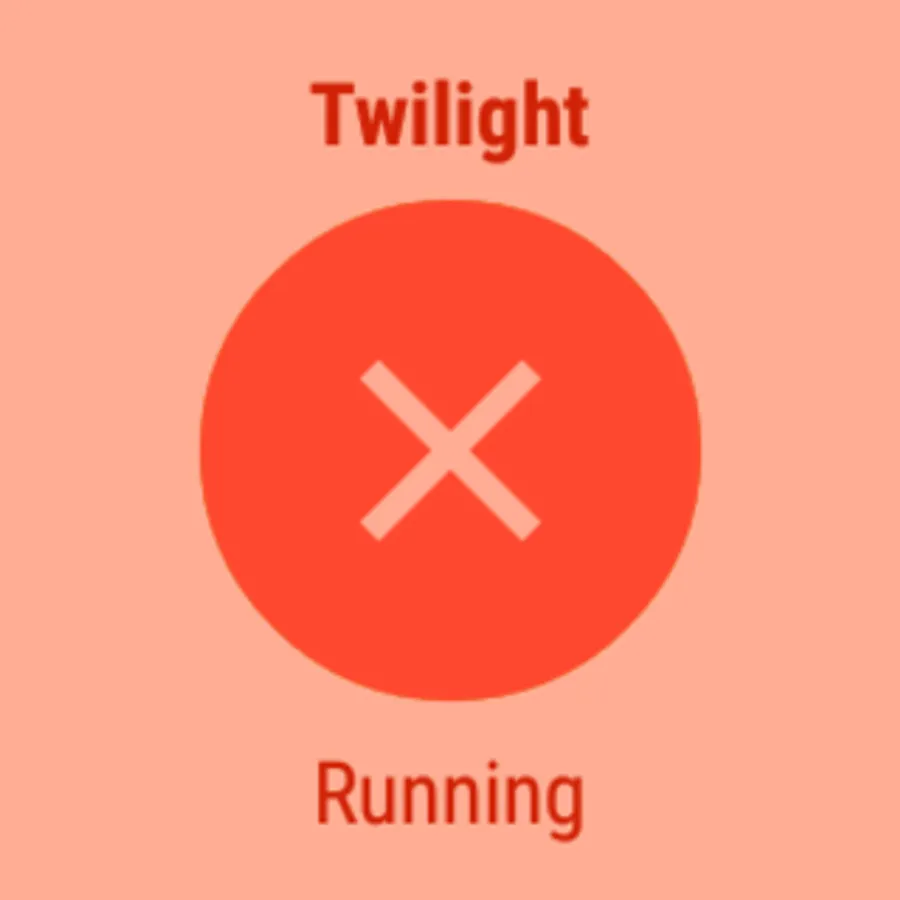
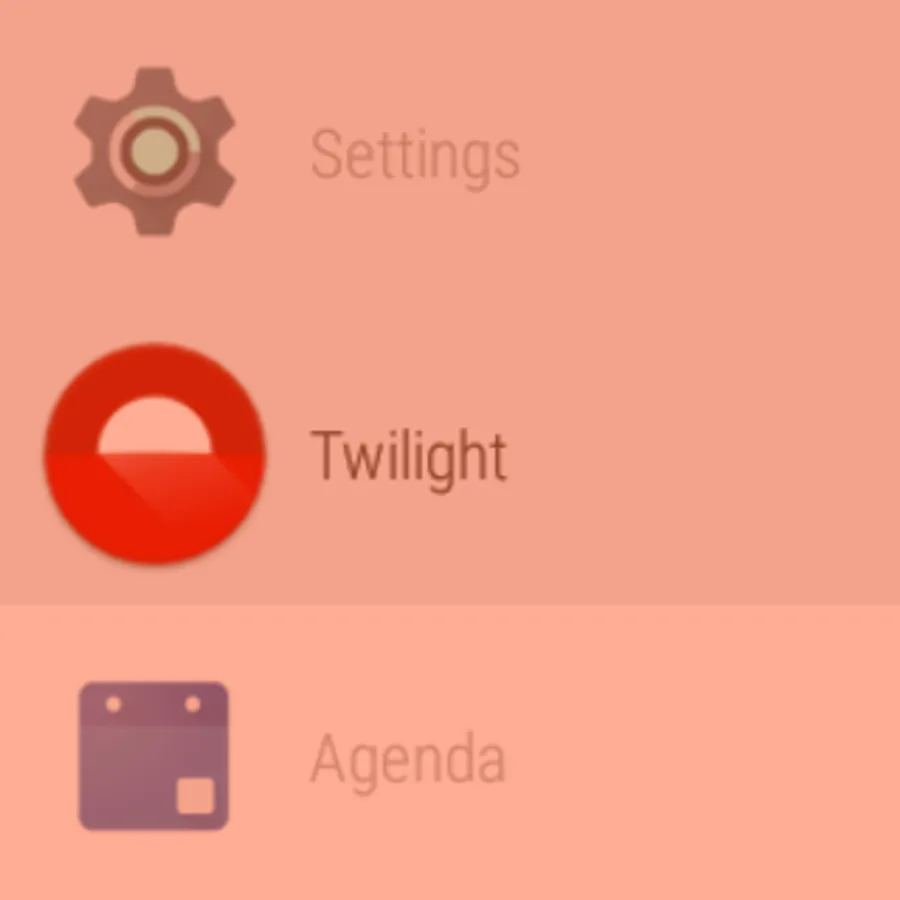
You can also use Twilight on your Wear OS device.
Documentation
http://twilight.urbandroid.org/doc/
Get more from Twilight
1) Bed reading: Twilight is more pleasant on the eyes for night reading. Especially as it is able to lower the screen backlight far below the ability of the backligt controls on your screen
2) AMOLED screens: We have tested Twilight on an AMOLED screen for 5 years without any sign of depletion or over-burning. If properly configured Twilight causes less light emission (by enabling dimming) with more equal light distribution (dark areas of the screen such as the status bar get tinted). This may in fact increase your AMOLED screen life time.
Basics on circadian rhythm and the role of melatonin
http://en.wikipedia.org/wiki/Melatonin
http://en.wikipedia.org/wiki/Melanopsin
http://en.wikipedia.org/wiki/Circadian_rhythms
http://en.wikipedia.org/wiki/Circadian_rhythm_disorder
Permissions
- location - to find out your current sunset/surise times
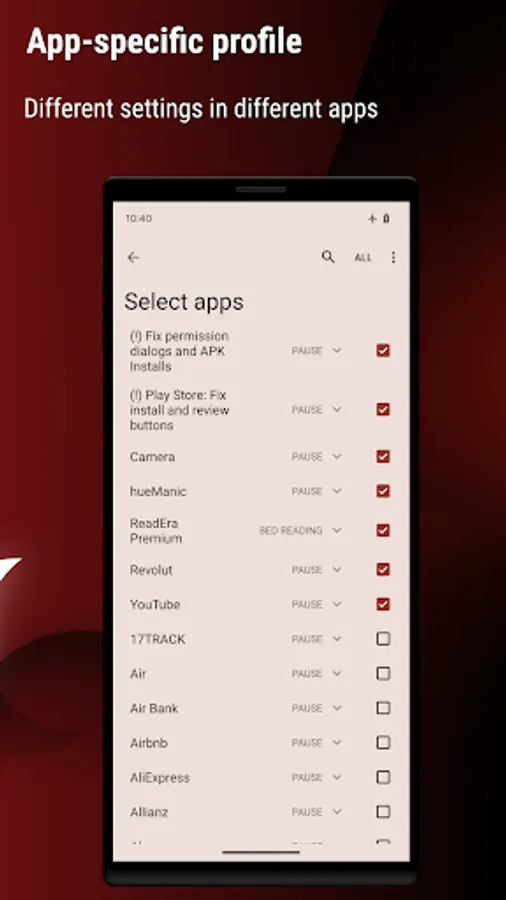
- running apps - to stop Twilight in selected apps
- write settings - to set back-light
- network - access smartlight (Philips HUE) to shield you household light from blue
Accessibility Service
In order to filter also your notifications and lock screen the app may ask for enabling Twilight Accessibility Service. The app uses this service only to better filter your screen and does not collect any personal information. Please read more about this at https://twilight.urbandroid.org/is-twilights-accessibility-service-a-thread-to-my-privacy/
Wear OS
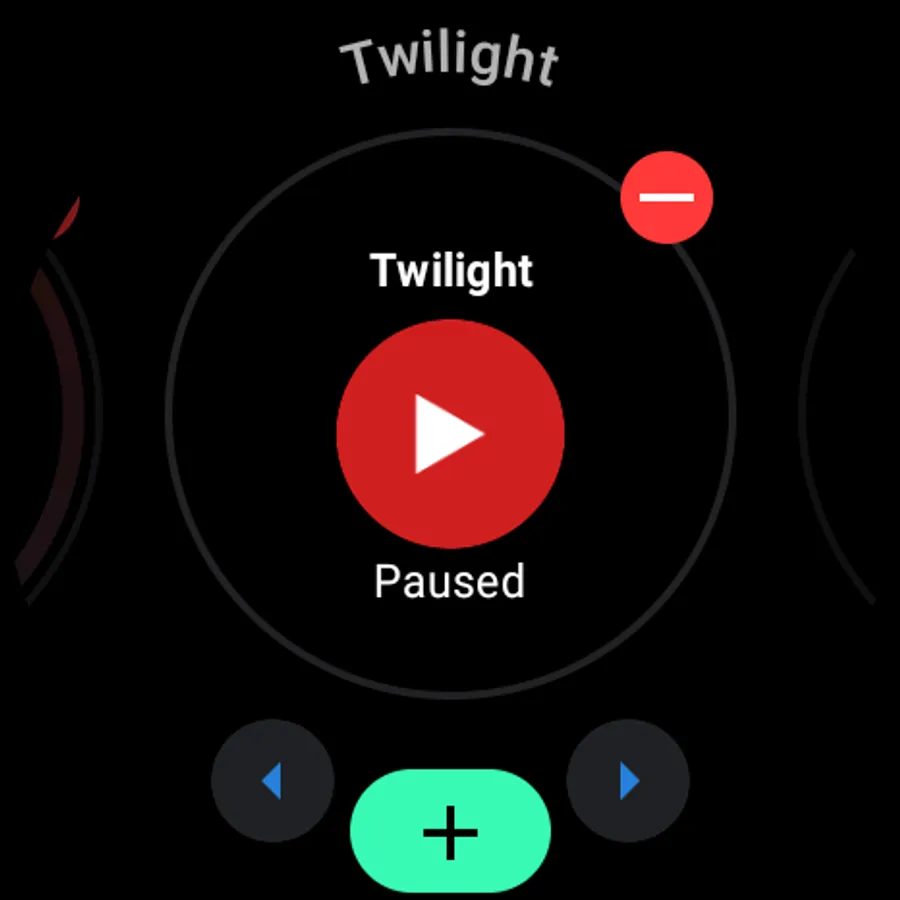
Twilight also syncs your Wear OS screen with your phone's filter settings. You can control filtering from a "Wear OS Tile".
Automation (Tasker or other)
https://sites.google.com/site/twilight4android/automation
Related scientific research
Amplitude Reduction and Phase Shifts of Melatonin, Cortisol and Other Circadian Rhythms after a Gradual Advance of Sleep and Light Exposure in Humans Derk-Jan Dijk, & Co 2012
Exposure to Room Light before Bedtime Suppresses Melatonin Onset and Shortens Melatonin Duration in Humans Joshua J. Gooley, Kyle Chamberlain, Kurt A. Smith & Co, 2011
Effect of Light on Human Circadian Physiology Jeanne F. Duffy, Charles A. Czeisler 2009
Efficacy of a single sequence of intermittent bright light pulses for delaying circadian phase in humans Claude Gronfier, Kenneth P. Wright, & Co 2009
Intrinsic period and light intensity determine the phase relationship between melatonin and sleep in humans Kenneth P. Wright, Claude Gronfier & Co 2009
The Impact of Sleep Timing and Bright Light Exposure on Attentional Impairment during Night Work Nayantara Santhi & Co 2008
Short-Wavelength Light Sensitivity of Circadian, Pupillary, and Visual Awareness in Humans Lacking an Outer Retina Farhan H. Zaidi & Co, 2007
Are you using your smart phone or tablet in the late evening? Are you sensitive to light during migraine?
Twilight may be a solution for you!
Recent research suggests that exposure to blue light before sleep may distort your natural (circadian) rhythm and cause inability to fall asleep.
The cause is the photoreceptor in your eyes, called Melanopsin. This receptor is sensitive to a narrow band of blue light in the 460-480nm range which may suppress Melatonin production - a hormone responsible for your healthy sleep-wake cycles.
In experimental scientific studies it has been shown an average person reading on a tablet or smart phone for a couple of hours before bed time may find their sleep delayed by about an hour. See references below..
The Twilight app makes your device screen adapt to the time of the day. It filters the flux of blue light emitted by your phone or tablet after sunset and protects your eyes with a soft and pleasant red filter. The filter intensity is smoothly adjusted to the sun cycle based on your local sunset and sunrise times.
You can also use Twilight on your Wear OS device.
Documentation
http://twilight.urbandroid.org/doc/
Get more from Twilight
1) Bed reading: Twilight is more pleasant on the eyes for night reading. Especially as it is able to lower the screen backlight far below the ability of the backligt controls on your screen
2) AMOLED screens: We have tested Twilight on an AMOLED screen for 5 years without any sign of depletion or over-burning. If properly configured Twilight causes less light emission (by enabling dimming) with more equal light distribution (dark areas of the screen such as the status bar get tinted). This may in fact increase your AMOLED screen life time.
Basics on circadian rhythm and the role of melatonin
http://en.wikipedia.org/wiki/Melatonin
http://en.wikipedia.org/wiki/Melanopsin
http://en.wikipedia.org/wiki/Circadian_rhythms
http://en.wikipedia.org/wiki/Circadian_rhythm_disorder
Permissions
- location - to find out your current sunset/surise times
- running apps - to stop Twilight in selected apps
- write settings - to set back-light
- network - access smartlight (Philips HUE) to shield you household light from blue
Accessibility Service
In order to filter also your notifications and lock screen the app may ask for enabling Twilight Accessibility Service. The app uses this service only to better filter your screen and does not collect any personal information. Please read more about this at https://twilight.urbandroid.org/is-twilights-accessibility-service-a-thread-to-my-privacy/
Wear OS
Twilight also syncs your Wear OS screen with your phone's filter settings. You can control filtering from a "Wear OS Tile".
Automation (Tasker or other)
https://sites.google.com/site/twilight4android/automation
Related scientific research
Amplitude Reduction and Phase Shifts of Melatonin, Cortisol and Other Circadian Rhythms after a Gradual Advance of Sleep and Light Exposure in Humans Derk-Jan Dijk, & Co 2012
Exposure to Room Light before Bedtime Suppresses Melatonin Onset and Shortens Melatonin Duration in Humans Joshua J. Gooley, Kyle Chamberlain, Kurt A. Smith & Co, 2011
Effect of Light on Human Circadian Physiology Jeanne F. Duffy, Charles A. Czeisler 2009
Efficacy of a single sequence of intermittent bright light pulses for delaying circadian phase in humans Claude Gronfier, Kenneth P. Wright, & Co 2009
Intrinsic period and light intensity determine the phase relationship between melatonin and sleep in humans Kenneth P. Wright, Claude Gronfier & Co 2009
The Impact of Sleep Timing and Bright Light Exposure on Attentional Impairment during Night Work Nayantara Santhi & Co 2008
Short-Wavelength Light Sensitivity of Circadian, Pupillary, and Visual Awareness in Humans Lacking an Outer Retina Farhan H. Zaidi & Co, 2007